Monday, September 03, 2007

Stephen's challenge


Stephen has decided on the photochallenge of September for the Sears family and their visitors who are also invited to take the challenge. The theme is "harvest". This word (as a schoolmaster I can't help teaching) is closely related to the Dutch word "herfst" and the German word "Herbst", both meaning "autumn". For harvest the Dutch have the word "oogst" (requires long practice for non-Dutch for the proper pronunciation), and the German say "Ernte" when they mean harvest (requires for English speaking people also a lot of practice to be pronounced the right way). So I think that the English simply took herfst / Herbst and chose a variation that suited their tongue and cheek movements, to indicate the collection of fruits and cerials in the Autumn, which they called "Autumn" because harvest / herfst /Herbst was now reserved for the fruit-and-cerials collection.


This theory will soon be published in the Hurdegarypster Journal for Historical Linguistics.


Anyway, cycling home from school I found one of these mini-stands along the road that pop up here and there around this time, offering fruit, marmelade and vegetables from the home's gardens. Alongside the products you find a price list and a jar in which you are supposed the money. Unfortunately this one was already nearly sold out, I already had marmelade, beans and red beets from them. I'm proud to live in a region where people trust each other this way!

A day on the water and with family


Yesterday we went sailing; my boat never went so fast, aroud 2 PM the windforce wasn't 4 but 5-6 and on top of that the main sail lacked a reef possibility (which I'm going to change this winter). At the end of July we had also this kind of wind, but then I improvised a reef by binding the hind-part of the sail to its bottom bar ("giek" I don't know the English word), but although it worked, it didn't satisfy because of the loose sack which it causes at the sail bottom. I don't trust the boat 100% because of its old rigging - I heard too many stories about broken masts etc. - so I only dared sail with hoisted sails with the wind blowing from behind. Janine, Menno, my brother Peter and the dog were with me on the boat and Janine and Peter (who don't know much about sailing) encouraged me not to put on my improvised reef (why do we need that? - this is not a storm!). After the trip, when we were at home Janine told me that I should be more bossy and a real captain so when people wanted other things than I had in mind, I should overrule them and make my word law. That day she got familiar with the forces that a boat has to endure at windforce 5-6 with full sails. I was on the other side happy to got familiar with how the boat behaves under these circumstances, nothing was damaged but I was sure it would have been very difficult and probably impossible without severe damage, to sail with the wind from 45 degrees in front of us(in Dutch: "sharply to the wind"). We went that fast that after having dropped the sails and started the engine I thought at first that the engine didn't work because of the difference in speed with the sailing movement. Under more normal circumstances we could sail the whole route until the home marine, but this route leads us through rather narrow canals, and with that speed this could have been dangerous because there were more boats and collisions are not easy to avoid then. Apart from this: the big number of motor boats nowadays annoys me sometimes because these people often lack knowledge of (1) traffic rules on the water and (2) sailing, so one cannot rely on traffic rules because you don't know if the motor skipper knows them and I most of them are not familiar with the possibilities and restrictions of a boat with sails, so they simply keep their course and take priority also if they haven't. I suspect that many of them think that a sailing boat is more "primitive" and never have priority!


The late afternoon we spent at my brother's new house in a village in the Eastern part of the province, and we admired the way he has (re)furbished it. He has a son (17) and two daughters (I think 14 and 12), he and his wife working and still studying so their life is one big agenda without holes. He shares the photo-hobby with me. They went to the Czech Republic on holidays (formerly part of Csechoslowakia, what a shame that this small country has been split up in two still smaller parts!) and he showed me a number of pictures he made over there. Two of them you can see on my photoblog (4 and 5 September).


As for my thoughts on the subject I wrote about the two previous times: I don't think we have tot take this too dramatically. It's true that many Christians and Liberals in the West on the one hand, and many Muslims in the East on the other hand, mistrust each other. It's true that many Muslims adhere more strongly to family- and respect-values than Westerners do (translating respect by adherence to tradition values and not to achievement values per se) and that in Western eyes there's not much difference in their perception of a Biblical desert-society and a rural Muslim society nowadays, but it's not true that there are no liberal-thinking Muslims. Just as is the case with Christians, what people hear, read and see are the loud preachers and the Truth-owners, not the silent spiritually-inspired or the hard-working and modest contribuants to prosperity and welfare. Preaching that people who have another belief must be fought, or must be converted by all means, means that one is scared: there simply MUST be one concrete and tangible truth with all rules and regulations attached to it, otherwise earth (and the preacher / converter!) will end in hell. I don't hesitate to say that the Liberal truth is also one of many truths, although I love the heritage of Goethe, Spinoza and Kant.


This is a view, a vision, and one cannot do more than living according to this view as much as possible, although emotions often challenge you. I hope and trust that eventually Reason will win.

Saturday, September 01, 2007

One of today's questions

Tomorrow’s program tells us that we’ll have a sailing trip with my brother. There will be windforce 4 and a reasonable chance of some rain. We are not sure whether Janine and Menno will join us, we decide that I think this evening. The school will take its normal course again. I just have sent an e-mail to a student whose dissertation concept was awful, I’m afraid that he will require very close guidance, according to the famous 8—20 rule: 20% of all cases ask for 80% of time and attention. He hasn’t been guided up to now by me and luckily these cases are rare. His study pace is slow because since 2 years we have team-dissertations: groups of students study like consultants company problems for which they design a solution, a very successful formula; the only disadvantage is that it’s not individual, but individual contributions within the team are weighed and included in the final assessment. A problem is also that there must be sufficient co-operating companies, and that the cases are sufficiently serious to reach a dissertation’s level.

Something else: last time I asserted that when you ask an Afghanistan opium-growing farmer if growing opium is in accordance with Islam, he would answer that such a question wouldn’t suit me, because the Western world causes much more problems than he does with his job. I gave it a second thought and I think I have to adjust this: probably the farmer would take his life and world as it is, without such “Western” questions, even if he could read and follows the news. So many people everywhere in the world take everything as it is. They follow the tradition of their cultures and clans, and when these traditions have been weakened or are threatened by Western influences, there is always the daily struggle for food and living which will be done by means that in our eyes are less moral or objectionable.

Many hundreds of thousands of these people have immigrated into Europe, or try to immigrate. Of course, they bring with them their traditions and leaders who try to keep them on the right track, which is often contrary to the Western right track which they often consider to be sinful and despicable. Their world of views and truths are often diametrically opposed to values we find important: women and men treated equally, own choices in marriage and education, freedom of speech, variation in clothing, loose family bonds, rewards for achievement and not for kinship or tradition-adherence, etc. etc. Ten years ago I was very surprised by what I saw as arrogance, the way some of their leaders preached hatred against Western society, at the same time receiving social welfare benefits. I thought: “Why are you here then?”, a very obvious question in Western eyes. In one of my lectures I showed in my ignorance a portrait of their prophet in a Powerpoint presentation, the same week I got reprimanded by a Muslim colleague because Muslim students had complained to him. I got flabbergasted because female teachers refused to shake hands with men (parents, colleagues) because their faith forbade them to do so, and a Muslim priest (imam) refused to shake hands with a Minister (State Secretary) visiting their mosque. I asked myself if Muslim ministers would visit Christian churches in a Muslim country, even our queen did so once and she wisely avoided trying to shake hands with the mosque leaders. In a TV program a Muslim leader refused to sit at an interview table together with seven other partners in a debate, because one of them had a glass of wine before him. His son, also a Dutch “celebrity” walked away from a program because one lady’s skirt was too short according to him.

I just read a wise article in my paper which brings me back to my rational senses. It says: let’s stop arguing and debating about how Muslims should adjust themselves to our values. Don’t pay attention to it anymore. In another newspaper there was an article discussing an American philosopher, Lee Harris, who has a more pessimistic view, he is right when he says that our values, based on philosophies by people such as Spinoza, Kant, Hegel, Voltaire etc. is very rare in the world. Only a few countries have succeeded in overcoming the all-embracing power of tradition, clan and family, trying to defend themselves with all thinkable means. In our laws and legislation “tolerance” is a main virtue, in most other countries it means weakness.

The way Muslim groups and leaders link their values and views to their fait is highly questionable. Many Muslims adhere to tolerance, reward according to achievement, respectful treatment of everybody, etc. but most of them live in the U.S.A. or have positions requiring high education in Europe, they are only a small minority, often considered as non-Muslims by their own brethren (sisters don’t have a say). We in Holland have a Muslim Minister and many Muslims are in local or regional governments.

After reading and thinking, I was left in confusion, there are still many questions, or maybe one or two very big questions, left to be answered.

Thursday, August 30, 2007

Varia Diversa


Hello blog, here we are again! I’m sorry for being absent for such a long time so you think I’ll have much to tell. Well, te be honest, the fact that I had little to tell was one of the causes of my absence so I have to do my best to get something worthwhile from the little corners of my imagination and memory. Of course, I could tell about my holidays and other stuff people tell each other when they are at work again. Why wouldn’t I? Well, we, that’s to say my wife Janine, our son Menno, our week-end “daughter” Elyanne and our dog Joris went sailing in Friesland, so we didn’t travel far away. It was lots of fun: the adults enjoyed the sailing and the children the playing along beaches and in marinas. We enjoyed all kinds of weather you can imagine: tropical heat, autumn temperatures, strong wind, almost no wind, tropical rain, Dutch rain (steady long term, not sudden showers), mist, clouds, clear sky, you name it, this is Western Europe, man! Now I’m at work again, already since a fortnight. My job is to assess dissertations or theses if you like, at bachelor’s level, and I try to avoid that the students’ stress will infect me, although many are in a hurry, if they get their grading too late (15 September they have to pay new tuition fees. No, they cannot charge it to me when it’s my fault because I left their work in the drawer for too long. I’m at an age at which many are already retired and I always try to keep up the image that I don’t want to retire that early and keep working as long as possible, but I know that’s not true, my true reasons for not retiring are secret and then you know already what I mean.

I’m also almost addicted to photography. Not that I picture everything that comes before my lense, but I like to photograph nice items, especially landscapes and “landscape furniture” such as mills, sailing boats, churches, etc. On my photoblog I discovered that there are as many photographers as kinds of subjects, and every photographer has his/her favourite subject items. My weakness is landscapes and related stuff, also because I cannot find time to be busy with creating the right light conditions, much Photoshopwork, arranging things, waiting long for the right moment, etc. No. Veni vidi vici (aut non successi): I came, I saw and I achieved (or failed). I make too many good pictures to post on my photoblog, which is restricted to only 1 picture per day – a very wise policy of the blog management.

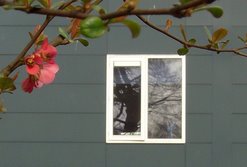
Above I show you some pics that couldn’t be posted on my blog because of this restriction. I also don’t want to become a bit one-sided and show each time either a mill, a house or a sailing boat, so some of them could have a place here. Enjoy!

Like so many other people I’m also bothered about what I read in the newspapers. I recently read the startling news that 90% of all heroine is grown in Af…istan. It has been found that the Nabilat (I don’t want to be found by searching machines on these words but you know what I mean) encourages to grow it, and get much profit from it. I’m sure these opium farmers are faithful Mu…ms and I wonder what they would answer when you would ask them why they grow opium, and if that is OK with the K..an. I know what they would answer me: you are rich, you drive a car, you have a machine for everything in the household and thanks to you the climate is changing so that people in Bangla Desh suffer from floods when the sea level is rising because of melting poles and glaciers. So what’s wrong about a heroin enjoying looser who is, on top of that, a victim of your pagan way of living, no, if you would follow the K..an and become mu…ms like me, there would be no heroin problem; what do I have to do with it, a poor farmer who works hard to earn a living? Thirdly: if I didn’t grow the opium the Nabilat would punish me. Etcetera etcetera.

So many things are relative, and many times I feel I have to choose, take a standpoint, be a MAN! There are many view- and standpoints to choose. In debates you notice that everybody is right and only a few people are completely wrong, but that people who are both right don’t seek to compromise or to find the common basis of their different views, but on the contrary, want to show how different their view is from their opponent’s view, and how wrong he is, and how right their own view is.

So much for today. Next time my latest contribution to the school magazine if I’ve nothing else to report.

Sunday, July 29, 2007

Photoblogging


I don’t know what’s going on with me. I seem to be hooked on my photoblog, neglecting my written blog. Well, let’s start afresh, and try to maintain my written diary of thoughts and events. First, my experiences with the photoblog and then my vicissitudes with boat and family.
The photoblog made me more aware of visual experiences. Also, I try to understand what photography, as mere expression or representation of visual reality, can mean for people, and then I mean the watcher. There’s no sharp distinction between watcher and maker of a picture, because the maker also watches his/her own products and enjoys them. One essential difference is that the maker selects and processes the picture, (s)he chooses an image, a frame, decides whether it will be black and white or in color, etc. and the watcher is there to assess it. I went browsing through many photoblogs and I must say that some attract me more than others do. Taste is an important factor, and there seems to be no room for “principles”: everything is allowed.
Another thing that struck me was that people from different cultures that according to the newspapers should be hostile or suspicious towards each other, are instead very much appreciating and respecting. So I know for instance that Islam tends to see dogs as haram animals, but when I publish a photo of my dog I receive positive reactions from Islamic countries; Christian people also tend to express admiration for characteristically Islamic images such as the calligraphed name of Allah. Also I saw positive response from Iran to an Israeli photographer. Most of the bloggers are from the USA, but that doesn’t seem to be a hindrance for the Islamic photographers. Maybe it’s a bit too much said, but photoblogging can be a contribution for mutual understanding and world peace this way. I love it.
Overseeing the different kinds of pictures there is certainly difference in quality. Some posters don’t seem to “have it”, and will not acquire it, but continue to post their products. I’m aware one shouldn’t be too quick in such an assessment for it can also be myself who don’t have the needed competence to assess pictures. Others post amazing photos which could yield good profit if offered for sale. This raises the question: what makes a good photograph a good photograph? I think it depends on the kind of picture. I make a distinction between “event pictures”, “emotional pictures” and “esthetical pictures”. All three share that they evoke emotion. A picture of an angry mob demonstrating against something, a portrait of a lovely baby, and a beautiful landscape or flower are three characteristic examples of what I mean. The emotional picture doesn’t need (but mostly has) event- or esthetical criteria, as long as the emotion is evoked. But the other two must have, next to their representation value, also an emotional value. Many photos on the photoblog don’t evoke emotion in me but seem to do so in others, so that makes them valuable pics and I have to be careful to reject them as good pictures. It’s amazing that in this world where everybody always has critical or negative remarks on other people’s products, photobloggers seem to be aware of that. If they don’t like a photo, they simply don’t comment.
What is also striking is the widespread use of advanced and expensive camera equipment and the use of Photoshop programs to process the pictures. When I started to be caught by the digital photovirus (it really becomes a virus if you can put your photos on the pc) my first pics were made on my 1 MP mobilephone. Some of these pictures seem to gain in value thanks to their blurredness. Then, after half a year or so, I bought a 5 MP HP Photosmart and carried it my pocket wherever I went, a flow of nice pictures were the result, many of them I posted on my photoblog that I started. Then on a sad day my wife dropped the camera and it turned out almost to a divorce :-) but we got a brand new one because it happened within the warranty period! But I had to miss my camera for a couple of weeks, and via my brother I bought a second-hand Sony 4 MP for 90 Euros (new in 1991 it costed 750 Euros!), my wife kept the HP. The Sony has several advantages such as macro-possibility but is a bit slower in starting up and editing stored pictures. Anyway, now I’m looking with water in my mouth at the expensive cameras with which most of the bloggers work, with changeable lenses and so on. In my non-digital days I used such a camera for films which now has become almost worthless on the second hand market but has cost me the amount of the cameras that I’m craving for now.
There are two things that withhold me from purchasing: first the price. It’s something luxury exclusively for my own usage within the household family, and I’m not allowing myself to spend that amount for a “toy” for only myself, where I can do with a cheaper product with a bit less possibilities. The second reason is that a good photo isn’t dependent on the equipment it is made with: there have been made excellent pictures with mobilephones, and lousy ones with 1000 euro-cameras. The more sophisticated equipment only offers more possibilities, and let’s not talk about the processing computer programs! No Photoshop process can turn a bad photo into a good one, only into a nice arrangement of colors and forms. So let’s do a while with my “primitive” little camera that I can use without getting the image of a photomaniac by people around me who are not contaminated by the photovirus when I always have that black machine around my neck (the grapes are a bit sour you notice). Next time more, about my boat-and-family vicissitudes.

Tuesday, July 10, 2007


Last week before holidays…
This morning I went my daily morning round (15 minutes) with the dogs. Yes digs, plural, for we have one dog staying with us because his boss couldn’t use him during her holidays. Before him, we had another dog staying with us for the same reason. Our dog is going with us, just like last year. This dog staying now with us is a special friend of our dog, almost the same breed, as a pup our dog got familiar with him when visiting his house and walking in the park. Joris, our dog, is the only male dog accepted by the guest dog Jelle. Anyway, both dogs sometimes pull their leashes quite strongly, on top of that in opposite direction, when they smell something attractive. It reminded me of the time period I am in now: on the one hand: haste, haste on my job straightening out things that have been lying but must be completed and chased by students who want to have their points for their bachelors thesis to graduate before September, combined with filling in our holidays agenda for the coming period, and on the other hand the uncertain coming period combined with attention for my blogs (I feel I have less time for them than a couple of months ago) and my sailing boat. The 20th Janine is going to a one week stay in a conference centre of her “School for Practical Philosophy” and Menno and I are “free” to do things that men like to do without female interference. Before that, Wednesday the 18th Janine will go and collect my mentally retarded brother from the Belgian border village Bergeijk to join us (us, that is Janine, Menno, his 8 year old “stepsister” and the dog) on the boat (easy-going!) on which we are then sailing somewhere in Friesland. He will not stay overnight on the boat during the night so alternately Janine and I will drive home with him to sleep until Sunday the 22nd, when I will bring him back home. After Janine’s absence we will sail for another week or two, going somewhat further on open water (Ijsselmeer, Waddenzee), then we don’t have Wessel and the little girl with us so we are free to sail as roughly we can.

Now putting this all together it appears to me that these things are almost too much for me to handle in such a short time, that’s where my odd feelings come from I think. Take for instance only the sailing boat: in my head I’m busy fixing things up, e.g. there is no reef in the sails so I improvised a way to make the sails smaller when it’s demanded by the wind strength. I don’t have energy and time to look for “great pictures” for my photoblog, either. And guess what? I took a walk in the park near my office and a coot with her youngsters almost tried to creep into my camera! Isn’t that consolation! I show the picture on the photoblog (right upper side of this blog).

Also I got an e-mail today from my cousin in a far away country who needed to pour out his feelings about the socio-economic situation over there. His father emigrated shortly after W.W. 2, when many Dutch people emigrated. I tried to cheer him up a bit, but I found he is also right and he is with his family in the middle of it. I thought of my slogan “it’s better to light a candle than to curse darkness” but even Jesus cursed darkness, e.g. when he chased the merchants out of the Temple. Sometimes I think our world is the Temple and the big money hunters are the merchants to be chased out. Recently I read about the Mediterranian coast completely spoiled by building companies, even now tourists are rare (the newcomers are stayers) they continue building hotels, for a great deal to whitewash black money; these Mafiosi are really unscrupulous, and don’t hesitate to set fire in areas where they can’t build because of nature protection.

Well, it’s time to think of my own little world of reality again, there are still 2 theses to grade today.

Thursday, June 28, 2007

The merchant, the army officer, the professor and the artist

I could also add: the priest or vicar, but I leave this out because the professions I mentioned deal with this world. The professions are ideal types of professions. It could be the result of a test on which you can score, indicating what type of professional you are. They are more or less mutually exclusive which means that they are “pure” and don’t tolerate each other’s features and characteristics. A good merchant is never a good artist, a good professor is very bad at leading an army platoon, etc.

I came to this distinction because of a discussion during a presentation of a dissertation team, in which the difference between a “manager” and an “entrepreneur” was discussed. I saw during that discussion the entrepreneur as the merchant, and the manager as the army officer. What does a manager do according to the management textbooks? Right: planning, leading, organizing and controlling, exactly what a high ranking army officer also is expected to do, just the same as a football coach is doing. The entrepreneur is both officer and merchant, which is not possible for a single merchant and a single officer. The officer would be accused for corruption and punished, and the merchant would loose real profit opportunities because now he is restricted by his organization, his employees and the law giving rules for enterprises: he cannot switch from trading in meals (restaurant) into car business overnight, and vice versa. But the true entrepreneur combines in a legal way both ideal types in him or her. The entrepreneur reflects the culture within which he can thrive, namely a democratic, tolerant culture. In the 17th Century the Netherlands were divided into the Arminians and the Gomarians. The Arminians recruited their members from the Amsterdam class of entrepreneurs with their V.O.C., and the intellectuals (the “professors”). Their spokesmen were Johan van Oldenbarneveldt (kind of “prime minister”), and the brothers De Witt, of whom Johan was also “prime minister”. They agreed with England that the Orange family had to be restricted in power. But the Gomarians uplifted the Orange family as their logo, and their orthodox Calvinist view on life and world was widespread among the common working class people. Although Oldenbarneveldt had been Maurits’ teacher and coach, Maurits was merciless in watching his beheading as a criminal. Maurits was a military, an officer, Oldenbarneveldt was a merchant and a professor. In fact, the Oranges made use of the Calvinist intolerance to gain power in collaboration with the army, damaging the economic interests of the merchants. The De Witt brothers were literally slaughtered by the “orthodox” mob, their bodies hung on poles, naked and cut open, while the “police” was watching, doing nothing. A situation as a consequence of co-operation between officers and vicars, who have to deal “not with this world”, according to Jesus’ words. We see the same now with imams calling for violent opposition to “worldly khafirs”, not realising that they also act worldly.
In those days an entrepreneur had far more characteristics of a merchant than he has today, today his job carries more and more the officer’s features. In fact, the pure merchant exists hardly anymore. But the “entrepreneur” carries a lot of his marking features: adventure, weighing risks and opportunities, striving for profit. The manager, like an officer, is more “neutral” and leaves the risk-taking strategy to his boss, the entrepreneur, who also is a manager (officer) more than he used to be. Democratic law makes his existence possible.
In fact, being an entrepreneur or manager in (post)modern times means that you have to be something of an artist and a professor, too. Not because these professions are worthwhile for their own sake but because they can be “profitable” (merchant) and can give “competitive advantage” (officer). In marketing and promotion/advertising campaigns the artist is “hired” and in product development and marketing the professor is also “hired”. Hiring means merchandise, and the modern merchant is aware that you have to hire as smartly as possible artists and professors to gain the biggest market share (officer), the best human resources (officer) to get the highest profit (merchant). The customer decides, this right is given to him by democracy, following the opportunities of technology and many, many services to be managed and merchandised by Covey-moulded managers and entrepreneurs. Alas, the customer doesn’t ask for many professor’s and artist’s interests that are not hired because the market doesn’t ask for them. They have to fight back with quality not measured by “meeting the expectations of the customer” but by “innate quality”, which is often not of this world, and is not for sale. You know what I mean, because it’s human, and any flesh-and-blood officer and merchant needs them, just like any real professor and artist needs merchant’s and officer’s traits.

Well, this was our ration of deliberation and rumination on an evaluation of a dissertation presentation by the younger generation :-)